

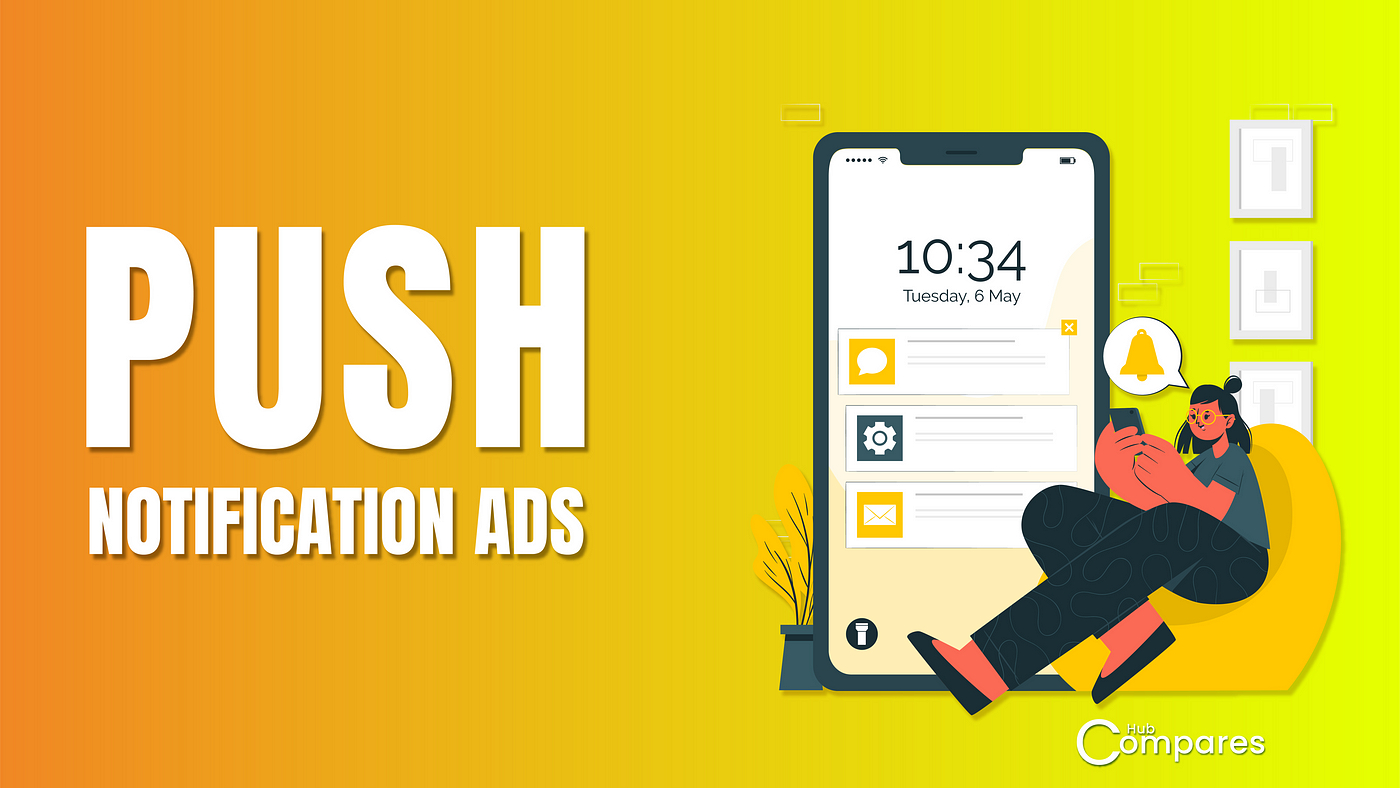
Push notification advertisements have gained popularity as a digital advertising tactic because they give marketers a direct line of communication with consumers on desktop and mobile devices. Because smartphones are so common and can be instantly accessed and acted upon, mobile push ads are sent through web browsers or applications for smartphones. These advertisements are especially alluring for short periods of time, as while commuting or standing in queue. Lock screen previews, sound, and vibration are examples of device features that increase visibility and urgency and increase engagement rates. When comparing mobile advertisements to desktop ads, marketers frequently report greater open and click-through rates. Additionally, geolocation capabilities improve mobile advertising by enabling highly targeted campaigns. Conversely, desktop push ad are utilised for longer periods of time, which leads to more intentional user interaction. Desktop customers are more inclined to complete complex transactions, interact with longer-form content, and thoroughly examine content, all of which increase conversion rates when particular industries.
Due to their capacity to elicit prompt actions and time-sensitive offers, mobile push advertisements are more effective in sectors such as commerce, entertainment, and food delivery. Better engagement metrics result from users being more inclined to accept push notifications ads on their phones, particularly from reliable applications. The size and calibre of subscriber bases can differ greatly between platforms, and desktop opt-ins might be more difficult to get. The efficiency of push advertisements is further impacted by technological limitations and browser regulations; for example, users can reject or mute alerts in Apple’s Safari browser, which lowers ad exposure, and desktop notifications are subject to tougher limits. For push advertising to be effective, advertisers need to keep abreast of policy changes.
Push advertisements on desktops and mobile devices are two marketing techniques that have many applications. Desktop push advertisements are useful tools in some sectors and professional settings because they offer a more steady environment for deliberate engagement and sophisticated conversions. Nevertheless, improved ROI may not always follow from mobile marketing’ cost-effectiveness.