


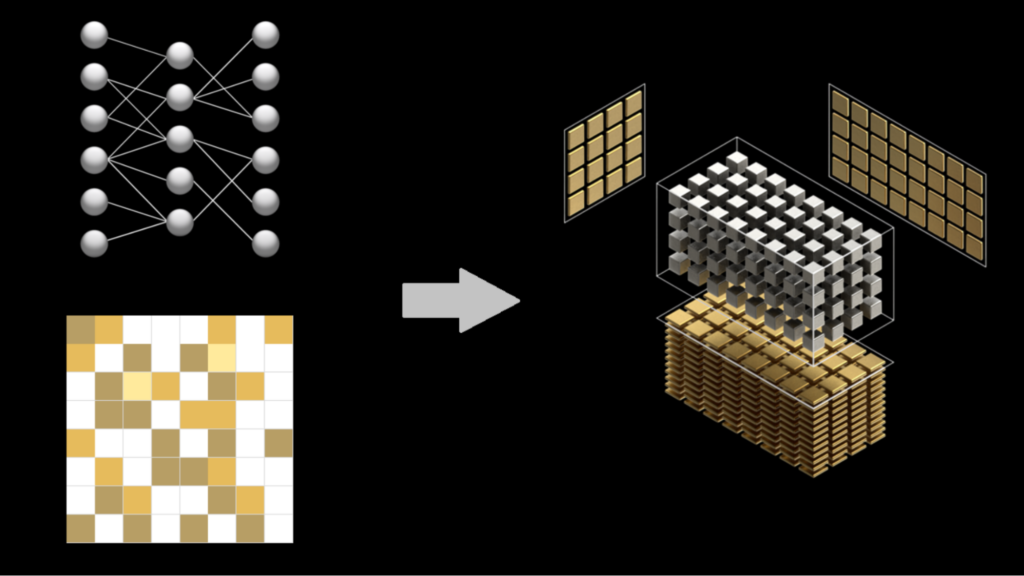
Imagine trying to paint a picture using a nearly blank canvas—just a few strokes scattered across vast white space. That’s what working with sparse datasets feels like. In data science, sparsity occurs when most features in a dataset are zero or empty, leaving analysts to extract meaning from minimal, scattered information. Yet, hidden within that emptiness lies structure, waiting to be revealed through the right techniques.
Understanding Sparsity through a Metaphor
Think of sparsity as listening for a whisper in a crowded room. The noise (zeros) dominates, but valuable signals exist if you know how to tune in. Sparse data is common in areas such as text analytics, recommender systems, and user behaviour tracking, where only a few variables carry meaningful values.
Instead of treating zeros as useless, skilled analysts treat them as clues. They indicate absence, silence, or inactivity—insights that can be just as powerful as active signals. Handling sparse data requires both mathematical precision and creative problem-solving.
Professionals refining such skills often begin with a data science course that covers practical feature engineering and dimensionality reduction, preparing them to manage real-world datasets that rarely fit textbook assumptions.
Why Sparse Data Matters
Sparse datasets might seem incomplete, but they hold significant potential. Consider recommendation engines—when users rate only a few products, their limited data points help predict preferences through pattern matching. Similarly, in NLP (Natural Language Processing), sparse word representations form the basis for understanding meaning through frequency and context.
The challenge lies in processing and storing these datasets efficiently. Traditional dense matrices consume vast memory, while sparse matrices store only non-zero elements, optimising computation and speed.
For those pursuing a data science course in Mumbai, this is often one of the first practical lessons—how efficient storage and algorithm design transform sparse data from a problem into a performance advantage.
Techniques for Handling Sparse Data
1. Dimensionality Reduction
Sparse datasets often have thousands of features. Techniques like PCA (Principal Component Analysis) or Truncated SVD compress this information into fewer dimensions while preserving key patterns. This not only reduces computational load but also highlights essential structures hidden in the data.
2. Feature Hashing
Feature hashing simplifies large feature spaces by mapping features into a smaller fixed-size space using hash functions. It’s particularly useful in text analytics or clickstream data, where unique identifiers can be enormous. The trade-off—occasional collisions—is manageable compared to the gain in speed and efficiency.
3. Regularisation
Techniques like L1 regularisation (Lasso) promote sparsity by shrinking less important coefficients to zero. This prevents overfitting and enhances interpretability. Essentially, it helps models focus only on the “brushstrokes” that matter in a largely blank canvas.
4. Imputation and Encoding
While zeros in sparse data often indicate absence, sometimes they represent missing information. Handling them correctly—through imputation, binary encoding, or target encoding—ensures that the model interprets absence accurately rather than as lack of importance.
Balancing Complexity and Clarity
Working with sparse data is a balancing act. Too much compression or aggressive regularisation can erase valuable signals. Too little, and the model drowns in noise. The key lies in experimenting with feature selection, monitoring performance, and validating across multiple datasets.
Modern tools like TensorFlow and Scikit-learn provide efficient sparse matrix support, making it easier to build scalable machine learning pipelines. But technical skill must pair with analytical judgement—knowing when to simplify and when to preserve detail.
A structured learning path, such as a data science course, allows learners to experiment with these trade-offs hands-on, using real datasets to grasp both the art and science of managing sparsity.
The Real-World Relevance
Sparse data dominates modern analytics. From social media posts to IoT sensor readings, most real-world information is incomplete. Analysts who can derive insights from this “empty space” bring immense value to businesses. They help transform fragmented user activity into personalised recommendations, detect fraud from rare transaction patterns, and interpret complex health records efficiently.
Professionals trained through a data science course in Mumbai often encounter such datasets in industries like finance, retail, and healthcare. Their ability to handle sparsity separates surface-level analysts from true problem-solvers who understand both the numbers and their silences.
Conclusion
Sparsity is not a limitation—it’s a landscape. Within those zeros lie hidden relationships, subtle patterns, and powerful signals. Mastering sparse data is like learning to see beauty in minimalism: clarity born from constraint.
As the world continues to generate more fragmented and high-dimensional data, the analysts who can navigate this terrain will lead the way. With curiosity, precision, and the right training, they’ll uncover meaning where others see emptiness—transforming sparse datasets into stories worth telling.
Business name: ExcelR- Data Science, Data Analytics, Business Analytics Course Training Mumbai
Address: 304, 3rd Floor, Pratibha Building. Three Petrol pump, Lal Bahadur Shastri Rd, opposite Manas Tower, Pakhdi, Thane West, Thane, Maharashtra 400602
Phone: 09108238354
Email: enquiry@excelr.com